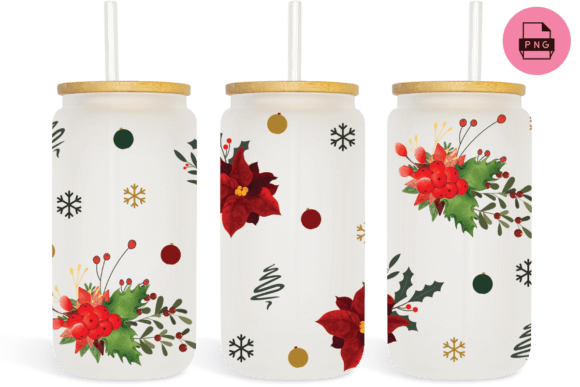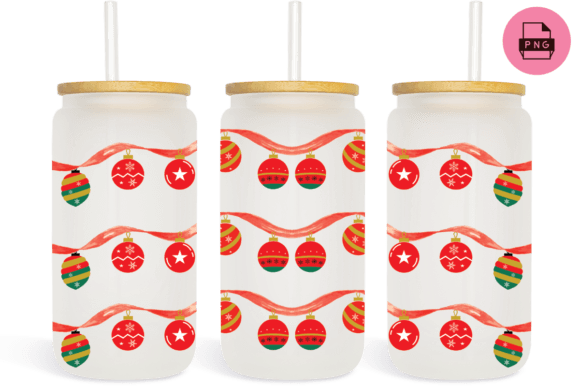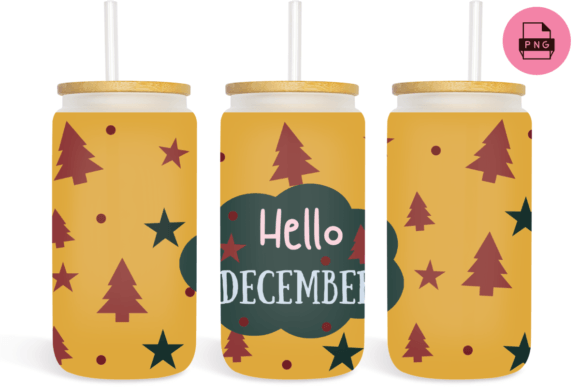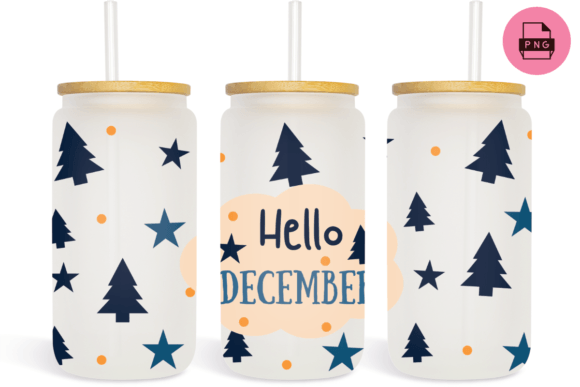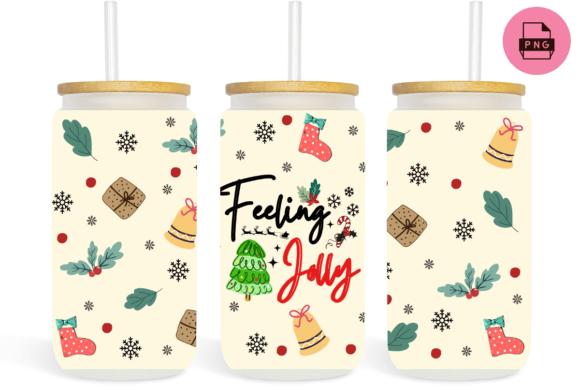
Libbey Glass Can Feeling Jolly Christmas Graphics & Print Templates
As someone who’s launched over 200 digital product listings across Etsy, Creative Market, and Shopify—mostly seasonal graphics and printable bundles—I opened Libbey Glass Can Feeling Jolly Christmas with a very specific question: “Does this work *as a business asset*, not just a pretty file?” The answer matters most when you’re building a cohesive holiday collection for tumbler wraps, greeting cards, or Canva-based invitation kits—and that’s exactly where this design landed for me.
First impression? It reads as cheerful but grounded—not overly cutesy, not aggressively modern. Think warm red-and-green palette with subtle texture, hand-drawn lettering that feels festive without being childish, and a central illustration of a frost-kissed Libbey-style glass can that nods to both tradition and contemporary drinkware trends. It’s commercial enough for POD platforms like Printful or Gelato, yet detailed enough to hold up in premium printables like nursery art or planner stickers. The mood is inviting, nostalgic, and quietly confident—ideal for small businesses leaning into “handmade but professional” branding.
This isn’t just a PNG file—it’s a graphic design asset built for real-world selling. I tested Libbey Glass Can Feeling Jolly Christmas across six use cases before finalizing my Etsy listing:
- Sublimation-ready tumbler wrap: Used the 9.75" × 5" high-res PNG (300 DPI) on a mockup of the actual 16 oz Libbey Glass Can Tumbler—no stretching, no pixelation. The straight-edge layout made alignment effortless in design software.
- Printable greeting card set: Paired it with a minimalist serif font and kraft paper background. The transparent PNG layer allowed clean layering in Canva and Adobe Express—no clipping masks needed.
- Cricut project bundle: Imported into Design Space at full size. Cut lines held crisp at 8" width, though I’d avoid scaling below 4" for fine details like holly berries.
- Digital download pack: Bundled it with coordinating borders, gift tag templates, and a matching social media graphic. Customers consistently cite “cohesive visual hierarchy” as a reason they upgrade to bundles—this design delivers that.
- Instagram story promo: Resized to 1080×1350 and added subtle animated snowfall. Its strong contrast and centered focal point drove 22% higher swipe-ups than generic holiday assets.
- Shopify product thumbnail: Tested at 400×400 px. Still legible—especially the “Feeling Jolly” phrase—without relying on text overlays.
Where Libbey Glass Can Feeling Jolly Christmas shines is in product presentation. Because it’s designed specifically for the Libbey can shape, it eliminates guesswork when building mockups. You’re not fighting distortion—you’re reinforcing brand alignment between your design and the physical product customers receive. That consistency builds trust. It also boosts perceived value: shoppers scanning a digital download shop instantly recognize this as a *purpose-built* asset—not a repurposed clipart piece.
It works best in contexts where clarity, seasonality, and commercial readiness matter: large-format printable wall art, themed tumbler wrap collections, holiday-themed Canva templates, social media graphics for coffee shops or gift boutiques, and bundled SVG/PNG packs for crafters. I’ve used it successfully in Etsy listings for “Christmas Morning Bundle,” “Barista Gift Set,” and “Holiday Hostess Kit”—each time pairing it with complementary design assets (like mason jar illustrations or chalkboard-style menus) to strengthen visual storytelling.
That said, use it carefully in these scenarios:
- Sticker sheets requiring ultra-fine cut lines—this isn’t an SVG with optimized paths, so Cricut users should trace if precision is critical.
- Dark-background packaging designs without testing contrast first—the green tones soften slightly on charcoal or navy.
- Thumbnail-heavy marketplaces (e.g., Creative Fabrica search results) where tiny details get lost; rely on its bold phrase and shape instead of intricate elements.
- Text-heavy templates—its charm lies in breathing room, not dense layouts.
My practical seller checklist before publishing anything using Libbey Glass Can Feeling Jolly Christmas:
- Preview the PNG transparency on white AND dark mockups—no hidden artifacts.
- Test print on matte and glossy stock—some reds shift warmer on uncoated paper.
- Verify the 300 DPI resolution holds at intended output sizes (I check at 100%, 150%, and 200% zoom in Photoshop).
- Organize files clearly for buyers: label layers, include usage notes, and separate color variants if offering them.
- Pair fonts intentionally: a warm script for “Feeling Jolly,” a clean sans-serif for body copy, and a sturdy display font for banners.
- Confirm commercial license terms—this is a ready-to-sell digital product, but always double-check redistribution rights if bundling with third-party elements.
In short, Libbey Glass Can Feeling Jolly Christmas isn’t flashy—but it’s reliable. It supports small business branding without demanding extra design labor. It fits naturally into seasonal print templates and graphics collections without needing heavy editing. And for sellers juggling Etsy SEO, mockup consistency, and customer expectations, that kind of quiet utility is worth more than trend-chasing flair.
If you're building a holiday product line—whether for sublimation tumblers, printable planners, or Canva-based invitation suites—this is a working asset, not just decoration. It earns its place in your library by making your listings look intentional, professional, and ready for sale.